
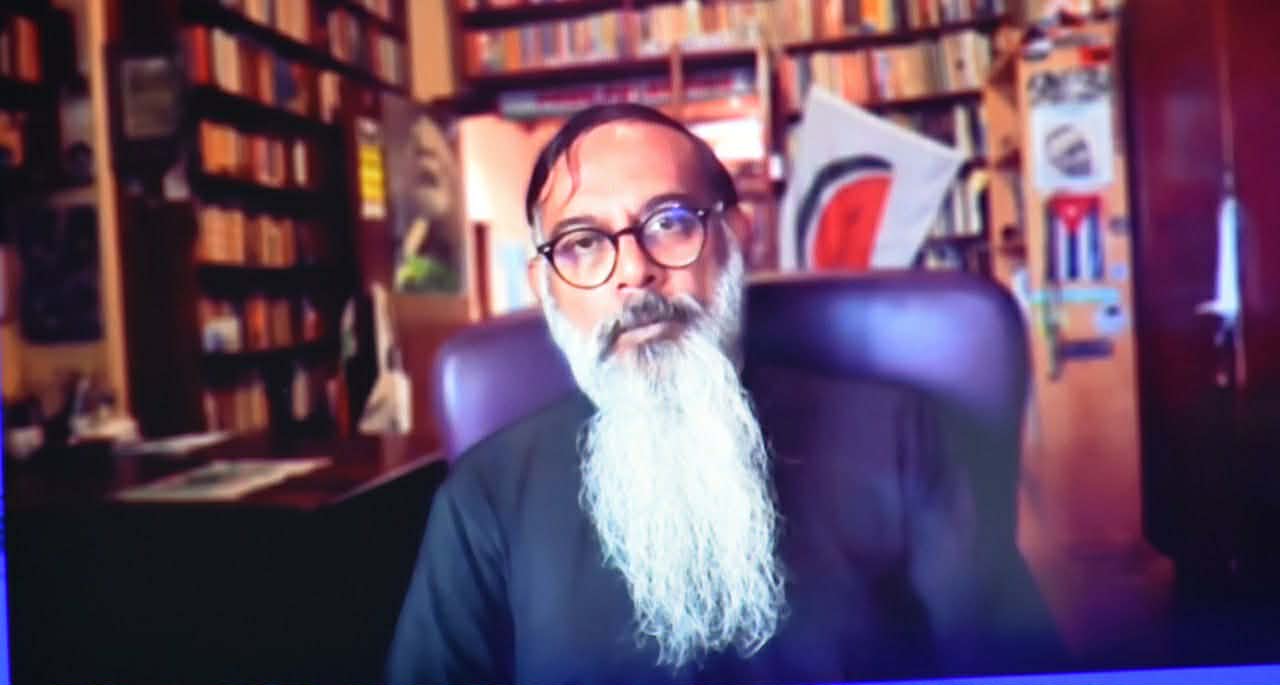


Our Contemporary Conjuncture, Polycrises, and Emergent Research Challenges
Svetové systémy, ktoré v súčasnosti obývame, sa nachádzajú v stave rýchlych zmien, chaosu a geopolitických posunov. Naše meniace sa prostredie a naše subjektívne reakcie do veľkej miery charakterizovali celú našu existenciu ako hominínov, ktorí sa oddelili od evolučných dráh ostatných veľkých ľudoopov a opíc približne pred 9 miliónmi rokov, a ako posledného existujúceho druhu nášho bytostného druhu od nášho vzniku približne pred 300 000 rokmi (Pontzer, 2012; Wong, 2018). Na základe súčasného stavu nášho vedeckého a technologického poznatkového commons si dnes zároveň uvedomujeme, že približne 99 % všetkých ostatných foriem života, ktoré sa objavili v histórii našej planétnej domoviny, v priebehu jej 4,5 miliardy rokov existencie Zeme vyhynulo (Rull, 2021).
Komplexnosť, intenzita, tempo a rozsah súčasného nepokoja sú však bezprecedentné v dejinách sveta a dnes sa konceptualizujú ako polykríza (Maharajh, 2026). Podľa Organizácie Spojených národov sa počet obyvateľov sveta v súčasnosti odhaduje približne na 8 286 985 158 ľudí (OSN, 2026). Regionálne rozdelenie je nasledovné:
Región | Populácia (2026)
Ázia | 4 863 327 397
Afrika | 1 584 985 259
Európa | 743 482 361
Južná Amerika a Karibik | 672 135 561
Severná Amerika | 389 628 823
Oceánia | 47 118 993
Podľa Medzinárodného menového fondu krajiny svetového systému vyprodukovali približne 184 010,16 bilióna randov [sto osemdesiatštyri kvadriliónov desať biliónov sto šesťdesiat miliárd] celkového hrubého domáceho produktu v roku 2025 (MMF, 2026). Rôzne regióny sveta prispeli k tomuto obrovskému objemu tvorby hodnoty veľmi nerovnomerne. USA a Kanada s 5 % svetovej populácie majú najväčší podiel na svetovej produkcii – 28 %, Európa s 9 % populácie prispela 24 %. Ázia a Tichomorie bez ČĽR zahŕňajú 42 % svetovej populácie, no vytvorili 22 % produkcie, zatiaľ čo samotná ČĽR so 17 % populácie vyprodukovala 17 % produkcie. Náš kontinent Afrika je domovom 19 % svetovej populácie, no vytvoril len 2 % globálneho HDP. Tento prehľad jasne odhaľuje marginalizáciu, vylúčenie a nedostatočný rozvoj v rámci svetového systému.
Ruská revolúcia roku 1917 zásadne zmenila svetové dejiny, keď sa usilovala o prechod od zaostalej agrárnej ekonomiky vo feudálnom spôsobe výroby k socialistickej spoločnosti, čím inaugurovala prvú rozsiahlu nekapitalistickú cestu rozvoja. Vznik Zväzu sovietskych socialistických republík v roku 1922 ponúkol alternatívny model ku kapitalistickému spôsobu, ktorý sa vyvinul v západnej Európe a bol rozšírený po svete prostredníctvom koloniálnych osadníckych režimov, ktoré násilne vyvlastňovali pôvodné obyvateľstvo, zavádzali režimy súkromného vlastníctva a nastoľovali systémy správy podriadené potrebám koloniálnych metropol. Imperializmus, ktorý V. I. Lenin označil za najvyššie štádium kapitalizmu, upevnil koloniálne ovládnutie území a viedol k rastúcej medzimperialistickej rivalite a konfliktom (Lenin, 1917). Prvá svetová vojna predstavovala veľký stret hlavných imperialistických síl a viedla k zániku ríš ako Rakúsko-Uhorsko (dynastia Habsburgovcov), Nemecké cisárstvo (dynastia Hohenzollernovcov) a Osmanská ríša (sultanát). Ruské impérium (dynastia Romanovcov) bolo zvrhnuté revolúciou roku 1917.
Pankaj Mishra cituje sociológa Maxa Webera, ktorý v septembri 1917 napísal: „Dnes na západnom fronte stojí zmes afrických a ázijských divochov a všetka svetová spodina zlodejov a lumpenproletariátu“ (Mishra, 2017). Podľa Mishru Weber narážal na milióny indických, afrických, arabských, čínskych a vietnamských vojakov a robotníkov bojujúcich po boku britských a francúzskych síl v Európe aj v ďalších bojiskách prvej svetovej vojny. Napriek konzervatívnemu odhadu, že prvá svetová vojna si vyžiadala približne 22 miliónov obetí, asi 4 milióny pochádzali z Afriky, Indie a juhovýchodnej Ázie (Chamley, 2014). Koniec vojny však neukončil koloniálne podrobenie – územia porazených ríš boli prerozdelené víťazom. Nemecká juhozápadná Afrika bola pridelená Juhoafrickej únii a neskôr sa stala kolóniou apartheidného režimu. Namíbia získala slobodu až po porážke apartheidu, podporovaného USA, v bitke pri Cuito Cuanavale v roku 1988.
Boje za národné oslobodenie sa po prvej svetovej vojne zrýchlili. Haiti sa oslobodilo už v roku 1804, no prvou africkou krajinou, ktorá získala nezávislosť, bola Zlatonosná pobrežná kolónia (Ghana) v roku 1957. Jej prvý líder však varoval pred neokolonializmom – snahou bývalých metropol zachovať nerovné výmeny inými prostriedkami. Oliver Tambo upozorňoval, že imperializmus síce uznáva potrebu dekolonizácie, no usiluje sa o takú formu, ktorá zachová jeho hegemóniu a moc – teda o neokoloniálnu dekolonizáciu (Tambo, 1979).
Druhá svetová vojna začala japonskou inváziou do Číny 17. júla 1937 a skončila dobytím Berlína sovietskymi vojskami 2. mája 1945. Čínska revolúcia vyústila do vzniku Čínskej ľudovej republiky v roku 1949, ktorá si zvolila nekapitalistickú cestu rozvoja. Brettonwoodska konferencia v roku 1944 založila Svetovú banku a MMF a povojnové usporiadanie upevnilo dominanciu USA. Tie následne viedli studenú vojnu proti nekapitalistickým systémom až do rozpadu ZSSR v roku 1991.
Južná Afrika dosiahla demokraciu až v roku 1994, no aj napriek reformám zostáva jednou z najnerovnejších krajín sveta. Mark Carney priznal, že medzinárodný poriadok založený na pravidlách bol do veľkej miery fikciou slúžiacou hegemónii USA.
Ďalším faktorom rozvoja je rýchly pokrok vedy a technológií a s ním spojená „kreatívna deštrukcia“. Napriek tomu dnes čelíme genocídam a eskalujúcim konfliktom vrátane zásahov USA a Izraela proti Iránu.
Podiel G7 na svetovom obchode klesol z 54 % v roku 1980, zatiaľ čo BRICS prevzal vedúcu pozíciu v roku 2023. Tento posun však sprevádzajú ekologické náklady. Nachádzame sa v období šiesteho masového vymierania – antropocénneho vymierania. Ekologické riziká sa prehlbujú a sú prepojené s polykrízami.
Z tejto pesimistickej analýzy však vyplýva aj nádej: výskum, ktorý si zvolíte vo svojom magisterskom a doktorandskom štúdiu, môže prispieť k riešeniam. Je potrebné prepájať teritoriálne štúdie s geopolitikou, hľadať pravdu na základe faktov a dekolonizovať kurikulum. Zároveň treba chrániť pôvodné a tradičné poznatky, ktoré boli ničené kolonializmom a rasovým kapitalizmom.
Naše spoločné osudy sú vo vašich rukách a mysliach. Verím vám – a som tým, kým som, aj vďaka vám všetkým.
Originál v angličtine
The world systems that we currently occupy are in a state of rapid change, chaos, and geopolitical shifts. Our changing environment and our subjective responses have largely characterised our entire existence as Hominins who separated from the evolutionary pathways of other great apes and monkeys almost 9 million years ago, and as the last extant of our species-being since our emergence approximately 300,000 years ago (Pontzer, 2012; and Wong, 2018). Based on the current state of our scientific and technological knowledge commons, we now also appreciate that approximately 99% of all other life forms that emerged in the history of our planetary home had gone extinct in its 4.5 billion years of Earth’s existence (Rull, 2021).
The complexity, intensity, pace, and extent of the current turmoil is however unprecedented in world history and is now conceptualised as a polycrisis (Maharajh, 2026). According to the United Nations, our world population is currently estimated to be approximately 8, 286, 985, 158 people at present (UN, 2026). We are regionally disaggregated as follows:
| Region | Population (2026) |
| Asia | 4,863,327,397 |
| Africa | 1,584,985,259 |
| Europe | 743,482,361 |
| South America and the Caribbean | 672,135,561 |
| Northern America | 389,628,823 |
| Oceania | 47,118,993 |
According to the International Monetary Fund, the countries of world systems produced approximately R 2,102.895 trillion [Two quadrillion, one hundred two trillion, eight hundred ninety-five billion] (or 126.3 trillion in current Us$) of total global gross domestic product in 2025 (IMF, 2026). The different regions of the world contributed very unevenly to this huge amount of value creation. The US and Canada with 5% of the world population has the largest share of world output of 28%, Europe with 9% of the world population contributed 24% of world output. Asia-Pacific without the PRC hosts 42% of the world population yet generated 22% of production, whilst the PRC with 17% of the population produced 17% of production. Our continent of Africa is home to 19% of the world population yet we only produced 2% of global gross domestic production. This snapshot shows in stark relief the marginalisation, exclusion, and underdevelopment in world systems.
The Russian Revolution of 1917 significantly altered world history as it sought to transition from an underdeveloped agrarian economy in a feudal mode of production to a socialist society and thereby inaugurated the first large-scale, non-capitalist development path. The advent of the Union of Soviet Socialist Republics which was established in 1922 offered an alternative model to the capitalist mode that evolved in western Europe and was transmitted across the world through colonial settler regimes that violently expropriated the indigenous peoples of the world, installed regimes of private property, and induced governance systems that were subordinated to the requirements of the colonial metropoles. Imperialism, which VI Lenin considered the Highest Form of Capitalism, consolidated the colonial capture of territories and gave rise to increasing inter-imperialist rivalry and conflict (Lenin, 1917). World War One saw a major clash between the main imperialist forces and the destruction of empires such as the Austro-Hungarian Empire (Habsburg Dynasty), the German Empire (Hohenzollern Dynasty), and the Ottoman Empire (Sultanate). Note that the Russian Empire (Romanov Dynasty) was swept away in the 1917 Russian Revolution.
Pankaj Mishra cites the sociologist Max Weber who wrote that “Today on the Western Front stands a dross of African and Asiatic savages and all the world’s rabble of thieves and lumpens” in September 1917 (Mishra, 2017). According to Mishra, “Weber was referring to the millions of Indian, African, Arab, Chinese and Vietnamese soldiers and labourers, who were then fighting with British and French forces in Europe, as well as in several ancillary theatres of the first world war” (Mishra, 2017). Notwithstanding the conservative estimate that World War One exterminated approximately 22 million people, approximately 4 million were from Africa, India, and Southeast Asia (Chamley, 2014). The end of WW1 did not however terminate the bonds of colonial subjugation as the territories held by the vanquished empires were transferred to the victors’ regimes. Thus, German South-West Africa[2] was transferred by mandate to the Union of South Africa and ultimately became a locally colonised territory of the apartheid regime. Namibia would only be liberated after the defeat of the apartheid regime which was supported by the United States in the Battle of Cuito Cuanavale in 1988.
The struggles for national liberation accelerated after the first world war. Whilst the peoples of Haiti liberated themselves from the France in 1804, the Gold Coast was the first country in Africa to achieve its sovereignty in 1957. The first leader of the liberated Ghana presciently warned however about the spectre of Neo-colonialism that arose as the colonial metropoles sought to maintain their unequal exchanges through means other than imperialist bondage. Even OR Tambo warned that “Thus while imperialism recognises that the time for the decolonisation of South Africa, Namibia and Zimbabwe has come, it wants a type of decolonisation which will leave its interests, its hegemony and its power in the region intact, a form of liberation therefore which will be incomplete and fraudulent, leaving the peoples of southern Africa bound hand and foot to the imperialist system of economic, military, political and other relations, the objects of imperialist exploitation and domination under a new guise. In short, imperialism aims for a neo-colonialist decolonisation” (Tambo, 1979). Tambo also noted that “they are also very busy creating such forces among the black oppressed as would replace the white minority regimes as the guarantors of the permanence of imperialist hegemony in southern Africa in exchange for high-sounding titles and a life of luxury for a handful of black traitors” (Tambo, 1979).
The Second World War began with the Japanese invasion of China on 17 July 1937 and ended when the Soviet troops captured Berlin on 2 May 1945. China’s national democratic revolution intensified and resulted in People’s Republic of China also electing to pursue a non-capitalist path to development on 1 October 1949. The United Nations Monetary and Financial Conference which is more popularly known as the Bretton Woods Conference was convened by the victorious allies and established the International Bank for Reconstruction and Development (World Bank) and the International Monetary Fund (IMF) in 1944. The post war settlement largely formatted the international rules of international relations and established the primacy of US hegemony. This was premised of the vainglorious assertion by the Office of the Historian of the United States Department of State which declared that “The United States emerged from World War II as one of the foremost economic, political, and military powers in the world” (OotH, 2026). In seeking to maintain and expand its hegemony, the USA and its collaborators enacted a cold war[3] against those not maintaining their capitalist relations of production which would persist until the collapse of the Soviet Union in 1991.
South Africa became the second last colonial territory in Africa to be decolonised as it achieved its democratic breakthrough in 1994. Western Sahara remains colonised by Morrocco and Spain at present. South Africa embarked on its reconstruction and development programme to redress the legacies of apartheid yet veered towards structural adjustment through its first Government of National Unity adopting a neo-liberal macro-economic strategy called the Growth, Employment and Redistribution in 1996. Whilst reform efforts continue, transformation remains elusive as South Africa retains its pejorative title as the world’s most unequal country measured by both wealth and income GINI indices (World Bank, 2022; WID, 2026). It is also significant that Mark Carney, the current Prime Minister of Canada and former governor of the Bank of England admitted at the World Economic Forum in Davos that the “international rules-based order” was built on a convenient fiction – one where the strongest exempt themselves and enforce rules asymmetrically. Yet, he argued, this fiction was useful, as American hegemony provided global public goods (Carney, 2026).
A further aspect propelling development has been the rapidity and scale of advances in scientific knowledge production, its translation into technological development, and the creative destruction (innovation) that these developments have unleashed. Notwithstanding some progressive possibilities being opened up by our global knowledge commons, we have again descended into the barbarity of genocides in the centre of Africa, the north of our continent, and in west Asia at present. Besides the settler colonial occupation of Palestine and Lebanon, the regimes of the US and Israel have launched illegal military actions against Iran which continue to escalate global tensions as the material basis for the hegemony of the US and its allies declines significantly.
Whereas the G7 (Canada, France, Germany, Italy, Japan, the United Kingdom, and the United States) combined economies held over 54% of the total world trade in 1980, the newly emergent BRICS association took the lead in 2023. It is currently estimated that the BRICS now command 35.43% of world trade while the G7 accounts for a diminishing 29.64% (Statista, 2026). Whilst this could have been a movement of celebration, we are increasingly aware of the ecological costs of our current development praxis. From a scientific perspective, we can now with a high level of confidence state that we are currently surviving through the sixth mass extinction, or the Anthropocene extinction. Our ecological precarities are rapidly escalating and are severely intertwined within polycrises. These serve to expand the complexity of the challenges confronting us all, but also opened up aspects that are prone to critique and the formulation of alternative development prospects.
From the depth of such a pessimistic analysis, I certainly hope that we can find some optimism through the research topics you choose to conduct for your Masters and Doctoral qualifications. I suggest we further integrate territorial studies with the geopolitical themes such that we can focus on local, regional, national, and global dimensions. I also seriously encourage that we seek truth from facts and utilise the results we generate to decolonise our curricula. These are not trivial tasks and responsibilities as they constitute a core aspect of the intergenerational transfer of information and data that has afforded our species being to reach our current population scale. We should also guard and protect our indigenous and traditional knowledges that have suffered the epistemicide of colonialism, racial capitalism, apartheid, and our current stage of our post-apartheid reconstruction and development praxis. Our collective fates are in your hands and in your minds. I have faith in you all, as I am also because of you all!
Rasigan Maharajh, PhD, MASSAf.
22 April 2026[1].
References
Carney, M. 2026. Special address by Prime Minister of Canada, 56th Annual Meeting, World Economic Forum, Davos-Kloster.
Chamley, S. 2014. Remembering Africa’s World War I dead, New African (11 December)
IMF. 2026. Database, International Monetary Fund, Washington.
Lenin, V.I. 1917. Imperialism, the Highest Stage of Capitalism, Progress Publishers, Moscow [1963 edition].
Maharajh, R. 2025. Ecological Challenges for Systems of Innovation Analysis in Africa, Chapter 6 in Scerri, M. [editor] Understanding Systems of Innovation in Africa – a Political Economy Approach, AOSIS Publishers, Cape Town
Maharajh, R. 2026. Hyper-Imperialism, Our Contemporary Conjuncture, and the Extension of Human Rights to Education, PoliTeknik 18 (January-April): 10.
Maharajh, R. 2026. The Bandung Conference in Contemporary Perspective: Its Significance for the Global South and Africa [world majority],
Mazibuko-Makena, Z.; Maharajh, R.; and Zwane, N. 2026. An Introduction to an Age of Disasters: Polycrises and Epochal Disasters, Chapter 1 in Mazibuko-Makena & Maharajh [Editors] South Africa in an Age of Disasters: Managing Risk and Building Competence, Mapungubwe Institute for Strategic Reflection, Johannesburg, pp. 1-27.
Mishra, P. 2017. How Colonial Violence Came Home: The Ugly Truth of the First World War, The Guardian, 10 November.
OotH. 2026. Office of the Historian, Shared Knowledge Services, Bureau of Administration, United States Department of State, Washington.
Orwell, G. 1945. You and the Atom Bomb, The Tribune, 19 October.
Pontzer, H. 2012. Overview of Hominin Evolution, Nature Education Knowledge 3(10): 8.
Rull, V. 2021. Biodiversity Crisis or Sixth Mass Extinction? EMBO Reports 23(1): e54193.
Tambo, O. R. 1979. The Spirit of Bandung. Address to the International Conference in Support of the Liberation Movements of Southern Africa and in Support of the Frontline States, Lusaka, 10 April.
Maharajh, R.; and Tivana, S. 2024. Ecocide or Socialism: Ecological Challenges and the Contradictions of Neoliberal Capitalism, in Balfour [editor] Mzala Nxumalo, Leftist Thought and Contemporary South Africa, Jacana Press, Johannesburg, pp. 301-321.
UN. 2026. World Population Prospects, United Nations, New York.
WID. 2026. World Inequality Report, World Inequality Lab, Paris.
Wong, K. 2018. Last Hominin Standing, Scientific American 319(3): 64.
World Bank. 2022. Inequality in Southern Africa: An Assessment of the Southern African Customs Union, World Bank, Washington.
[1] Keynote Address to Faculty of Humanities Masters and Doctoral Studies Orientation, Institute for the Future of Work Campus, Tshwane University of Technology.
[2] Cf. the Preface to Let Us Die Fighting: The struggle of the Herero and Nama against German Imperialism (1884-1915); where Samuel Shafiishuna Daniel Nujoma, then President of the South West Africa People’s Organisation and subsequently first president of Namibia, notes that “The social order which the Namibian people are fighting to overthrow is a product of a century of brutal colonial oppression and exploitation. It is essential, therefore, that those who are seeking to bring about a fundamentally new social order in Namibia should understand fully the events which helped, in the last hundred years or so, to shape the present social order in that country. Society is only fully intelligible when it is studied in terms of its history and of the economic, social, political and spiritual factors which helped to form it” (Nujoma, cited in Drechsler, 1966).
[3] The concept of a cold war appears initially in the literature in George Orwell’ framing of détente of nuclear-armed forces constituting a peace that is no peace and therefore a called a permanent ‘cold war (Orwell, 1945). Orwell noted further that “The atomic bomb may complete the process by robbing the exploited classes and peoples of all power to revolt, and at the same time putting the possessors of the bomb on a basis of military equality. Unable to conquer one another, they are likely to continue ruling the world between them, and it is difficult to see how the balance can be upset except by slow and unpredictable demographic changes” (Orwell, 1945).