


The Bandung Conference in Contemporary Perspective: Its Significance for the Global South and Africa [world majority]
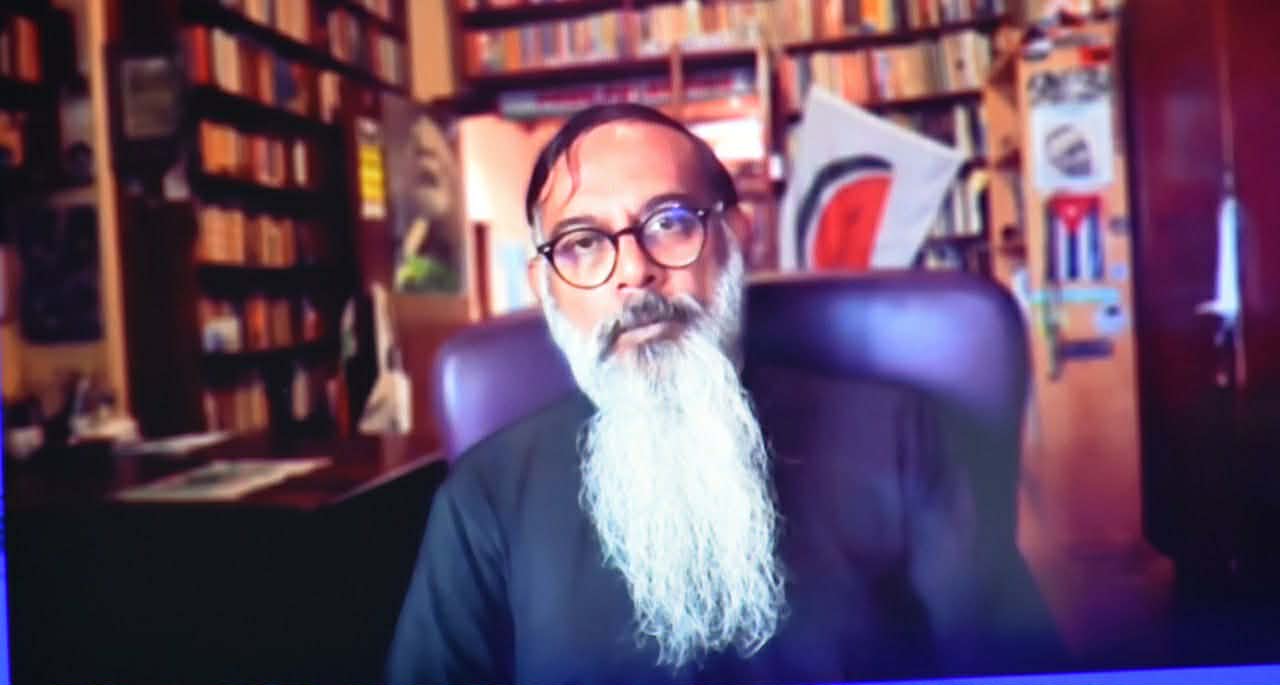
DAV DVA rozširuje korešpondentov do svetových rozmerov. Po spoluprácach so Srbskom, Kazachstanom, Čínou, Kubou je tu prvý prienik do Afriky. Autorom je štúdie je Rasigan Maharajh, je juhoafrický aktivistický vedec, futurista a politický expert špecializujúci sa na politickú ekonómiu vedy, techniky a inovácií. Je hlavný riaditeľ Inštitútu pre ekonomický výskum inovácií (IERI) na Technickej univerzite Tshwane, túto pozíciu zastáva od založenia inštitútu v roku 2004. Pôsobil ako národný koordinátor Projektu transformácie politiky vedy a techniky pre juhoafrickú vládu národnej jednoty a neskôr ako vedúci politiky Rady pre vedecký a priemyselný výskum (CSIR) v roku 1997. Je uznávaný ako africký futurista a je aktívny v niekoľkých globálnych sieťach predvídavosti, vrátane pôsobenia ako riaditeľ Juhoafrického uzla projektu Milénia. Jeho práca aplikuje myslenie o budúcnosti na politiku, najmä vo vede, technike a inováciách. Má doktorát z Filozofického inštitútu pre výskumnú politiku na Univerzite v Lunde vo Švédsku a je absolventom Univerzity v KwaZulu-Natal a Harvard Business School.
0. Outline / Osnova
Táto prednáška je rozdelená do troch častí. Prvá časť predstavuje Bandungskú konferenciu. Druhá časť skúma niektoré významné dôsledky konferencie pre našu súčasnú konjunktúru. Tretia časť vyvodzuje závery pre svetovú väčšinu, s osobitným dôrazom na globálny Juh a konkrétne Afriku.
This Lecture is divided into three sections. The first section introduces the Bandung Conference. The second section examines several significant consequences of the Conference for our contemporary conjuncture. The third section draws conclusions for the world majority, with a particular focus on the global South and Africa specifically.
1. Introduction / Úvod
Ázijsko-africká konferencia, zvolaná v Bandungu v Indonézii od 18. do 24. apríla 1955, zhromaždila lídrov 29 ázijských a afrických krajín, reprezentujúcich takmer 1,5 miliardy ľudí, čo predstavovalo približne 54 % svetovej populácie v roku 1955. Prvé číslo Bulletinu ázijsko-africkej konferencie uvádzalo, že bola pozvaná aj Stredoafrická federácia, no odmietla účasť, keďže nebola schopná sa zúčastniť (MoFA, 1955a). Ako poznamenal O. R. Tambo, v tom čase úradujúci generálny tajomník Afrického národného kongresu: „Zjavne odmietnutý bol juhoafrický premiér pán Strydom, ktorý nedostal pozvanie, keďže nacionalistická vláda je vo svete neslávne známa ako podporovateľ zla, proti ktorému bude konferencia vystupovať. Namiesto Strydoma budú Južnú Afriku ako pozorovatelia reprezentovať lídri ľudu Moses Kotane a Maulvi Cachalia“ (Tambo, 1955).
Prezident Indonézie otvoril konferenciu, ktorú označil za „prvú medzikontinentálnu konferenciu farebných národov v dejinách ľudstva“ (MoFA, 1955b). Predsedom bol zvolený indonézsky premiér Ali Sastroadmijojo, ktorý vo svojom úvodnom prejave priznal, že „zazneli aj pochybnosti a dokonca podozrenia, akoby naším cieľom bolo vytvoriť nový zdroj napätia prostredníctvom protizápadného či dokonca protibieleho bloku“ (MoFA, 1955b). Napriek odmietnutiu týchto úmyslov poukázal na pretrvávajúce výzvy vyplývajúce z koloniálnych vzťahov podriadenosti, vrátane rasizmu a „nízkej životnej úrovne prakticky vo všetkých ázijských a afrických krajinách“ (MoFA, 1955b). Konštatoval: „Po stáročia naše krajiny odvádzali nekonečný prúd ziskov do dominujúcich štátov, zatiaľ čo my sme zostávali chudobní a zaostalí“ (MoFA, 1955b).
Predseda vlády Čínskej ľudovej republiky Zhou Enlai upozornil na rasizmus apartheidného režimu v Južnej Afrike a paralely s Palestínou a Taiwanom. V mimoriadne prezieravom vyhlásení uviedol: „Problémom dnes nie je, že by sme vykonávali podvratnú činnosť proti vládam iných krajín, ale že existujú ľudia, ktorí budujú základne okolo Číny, aby vykonávali podvratnú činnosť proti čínskej vláde… Naopak, je to Čína, ktorá trpí podvratnými aktivitami otvorene vykonávanými Spojenými štátmi americkými“ (MoFA, 1955c).
Kľúčovým výsledkom konferencie bolo komuniké (MoFA, 1955c) a s ním spojený pojem „duch Bandungu“. Deklarácia obsahovala desať princípov, medzi ktoré patrili: rešpektovanie ľudských práv, suverenity, rovnosti národov a rás, nezasahovanie do vnútorných záležitostí, mierové riešenie sporov, podpora spolupráce a rešpektovanie spravodlivosti a medzinárodných záväzkov (MoFA, 1955d).
Druhým významným výsledkom bola myšlienka „ducha Bandungu“, ktorú Roeslan Abdulgani definoval ako ducha mieru, nenásilia, nediskriminácie a rozvoja pre všetkých, založeného na vzájomnom rešpekte. Podľa Tricontinental bol tento duch hlasom stoviek miliónov ľudí žijúcich pod koloniálnou nadvládou, no postupne oslabil pod tlakom neokoloniálnych štruktúr. Samir Amin uvádza, že po konferencii Sovietsky zväz prerušil svoju izoláciu podporou oslobodzovacích hnutí v Ázii a Afrike. Podobne Správa Južnej komisie zdôraznila rastúcu sebadôveru globálneho Juhu a jeho snahu ovplyvňovať svetový poriadok. Sandew Hira poukazuje na koncept pluriverzality, ktorý sa objavil na konferencii, ako alternatívu k západnému univerzalizmu, ktorý legitimizoval kolonializmus pod zámienkou „civilizačnej misie“.
The Asian-African Conference, convened in Bandung, Indonesia from 18 to 24 April 1955 and brought together the leaders of 29 Asian and African countries[2] representing nearly 1.5 billion people which was approximately 54% of the world’s population in 1955. The first issue of the Asian-African Conference Bulletin noted that the Central African Federation was also invited but declined, as it was not in a position to participate (MoFA, 1955a). As O.R. Tambo, then acting Secretary-General of the African National Congress, also observed: “Clearly rebuffed was South Africa’s Prime Minister, Mr. Strydom, who received no invitation, as the Nationalist Government is world infamous as a supporter of the evils which the Conference will oppose. Instead of Strydom, people’s leaders Moses Kotane and Maulvi Cachalia will represent South Africa as observers” (Tambo, 1955).
The President of Indonesia opened the Bandung Conference, which he proclaimed was the “first intercontinental conference of coloured peoples in the history of mankind” (MoFA, 1955b). The Prime Minister of Indonesia, Ali Sastroadmijojo, was elected Chairperson and, in his opening speech, acknowledged that “There were utterances as well of doubts and even suspicions, as if it were our aim to create another source of tension by constituting an anti-western and even an anti-white bloc” (MoFA, 1955b). Notwithstanding his denial of such intentions, the Prime Minister laid out significant challenges persisting from colonial relations of subordination, including enduring racism and “the low standard of living in practically all Asian and African countries” (MoFA, 1955b). He lamented: “For centuries our countries have poured a never-ending stream of profits into the dominating countries, but we ourselves stayed poor and under-developed” (MoFA, 1955b).
The Premier of the People’s Republic of China, Zhou Enlai, drew the Conference’s attention to the racism of the apartheid regime in South Africa, drawing parallels with the situations in Palestine and Taiwan. In an extraordinarily prescient statement, he declared: “The problem at present is not that we are carrying out subversive activities against the governments of other countries, but that there are people who are establishing bases around China in order to carry out subversive activities against the Chinese Government. … On the contrary, it is China that is suffering from the subversive activities which are openly carried out without disguise by the United States of America” (MoFA, 1955c). We will return to these issues in the second section of this lecture.
The key outcome of the Conference was the Communique published at its conclusion (MoFA, 1955c) and the concomitant notion of the ‘Bandung Spirit’. The conference declaration included ten principles, prefaced by the assertion that “Free from mistrust and fear, and with confidence and goodwill towards each other, nations should practise tolerance and live together in peace with one another as good neighbours and develop friendly co-operation on the basis of the following principles:
1. Respect for fundamental human rights and for the purposes and principles of the Charter of the United Nations.
2. Respect for the sovereignty and territorial integrity of all nations.
3. Recognition of the equality of all races and of the equality of all nations large and small.
4. Abstention from intervention or interference in the internal affairs of another country.
5. Respect for the right of each nation to defend itself singly or collectively, in conformity with the Charter of the United Nations.
6. (a) Abstention from the use of arrangements of collective defence to serve the particular interests of any of the big powers.
(b) Abstention by any country from exerting pressures on other countries.
7. Refraining from acts or threats of aggression or the use of force against the territorial integrity or political independence of any country.
8. Settlement of all international disputes by peaceful means, such as negotiation, conciliation, arbitration or judicial settlement as well as other peaceful means of the parties’ own choice, in conformity with the Charter of the United Nations.
9. Promotion of mutual interests and co-operation.
10. Respect for justice and international obligations” (MoFA, 1955d).
The second key outcome was the idea of a Bandung Spirit. Roeslan Abdulgani, Secretary-General of the Bandung Conference and Indonesia’s foreign minister, defined the Bandung Spirit as “… the spirit of love for peace, anti-violence, anti-discrimination, and development for all without trying to intervene for one another wrongly, but to pay a great respect to one another” (cited in Tricontinental, 2025). According to Tricontinental, whilst “the Bandung Spirit was the voice of the hundreds of millions who had lived under colonial rule and who spoke against the horrendousness of colonialism as well as their hope for a new world,” this dissipated under “… the pressures from the neocolonial structure that continued despite the end of formal colonial rule,” leaving only “nostalgia for it” (Tricontinental, 2025).
According to Samir Amin: “Following the Bandung Conference (1955), the Union of Soviet Socialist Republics finally broke out of the isolation the Western powers had confined it to since 1917, and did so precisely by supporting the liberation movements in Asia and Africa, as well as the radically anti-imperialist and anti-neo-colonialist states that national liberation had produced” (Amin, 2024: 15-16). The Report of the South Commission similarly argued that “the experience of the liberation struggles of the Afro-Asian peoples generated hopes that, through appropriate collective action, this global system could be made accommodative of the interests of the South. The Afro-Asian Conference at Bandung in 1955 was both an expression of the growing confidence of the South in its collective strength and an assertion of its determination to influence global relations in a truly internationalist direction” (Nyerere, 1990: 30).
Sandew Hira notes another important concept that gained traction from the Bandung Conference’s discussion on civilisations: “the concept of pluriversity was introduced at the Bandung conference of 1955” (Hira, 2023: 517). Hira argues that “… the current colonial world civilization is based on the principle of universality. The colonial world civilization was based on the ethical principle that humankind progresses from backwardness to modernity. In this world the modern people are the superior people, the good people, with a moral duty to elevate the backward people to modernity and to civilize the uncivilized. It is the moral duty of the good and modern people to interfere and fight the evil people who prevent their communities from achieving a modern lifestyle by any means necessary. Wars are launched by the West in the name of liberating backward people from evil forces and building new societies based on the concepts of modernity” (Hira, 2023: 517). Hira rightly points out that such a “narrative is full of hypocrisy” (Hira, 2023: 517), an indictment that allows us to turn to the next section of this lecture on the relevance and significance of the Bandung Conference in our contemporary conjuncture.
2. Relevance and Significance of the Bandung Conference in our Contemporary Conjuncture / Relevantnosť a význam v súčasnosti
Súčasnú konjunktúru charakterizuje hyperimperializmus, neokoloniálne reakcie a ekologické krízy. Šírenie „alternatívnych faktov“ oslabuje dôveru v objektívne poznanie. Mark Carney priznal, že „medzinárodný poriadok založený na pravidlách“ bol do veľkej miery fikciou slúžiacou hegemonickým mocnostiam. Wang Yi pri 70. výročí konferencie zdôraznil potrebu oživenia ducha Bandungu v čase rastúcich konfliktov a napätí. Tricontinental upozorňuje, že jediným skutočným vojensko-politickým blokom je aliancia vedená USA, ktorá si napriek poklesu ekonomickej moci udržiava vojenskú dominanciu. Hybridné vojny a zásahy proti suverénnym štátom si vyžadujú kolektívnu odpoveď globálneho Juhu. Zároveň pretrvávajú ekonomické nerovnosti, obchodné bariéry, zneužívanie rezervných mien a režimy duševného vlastníctva, čo sa ukázalo napríklad počas pandémie COVID-19. BRICS predstavuje určitú nádej pre globálny Juh, no zároveň čelí vnútorným rozporom a krízam legitimity.
Our contemporary conjuncture is being defined by the dynamics of hyper-imperialism, reactionary actions by neocolonial forces, and escalating ecological precarities. The rise of “alternative facts” has eroded trust in objective information, replacing it with a pervasive doublespeak (Conway, 2017). The hypocrisy identified by Hira and others was recently on stark display when Mark Carney, a leading figure of the global capitalist establishment, admitted that the “international rules-based order” was built on a convenient fiction – one where the strongest exempt themselves and enforce rules asymmetrically. Yet, he argued, this fiction was useful, as American hegemony provided global public goods (Carney, 2026). This candid admission is a striking mea culpa from the transnational elite, acknowledging the very power imbalances that progressive critics of capitalism have long identified and condemned.
In reviewing the 70th Anniversary of the Bandung Conference, Wang Yi, a Member of the Political Bureau of the CPC Central Committee and Minister of Foreign Affairs of the People’s Republic of China, argued: “Today, seventy years later, transformation unseen in a century is unfolding in a profound way, and changes and turbulence beset the international landscape. People of the world share a common wish for enhanced mutually beneficial cooperation and common development. Yet power politics and unilateral bullying practices continue to undermine international rules, creating divisions and confrontation. The world has once again come to a critical crossroads. We must keep in mind our original aspirations, carry forward the Bandung Spirit, further strengthen solidarity and cooperation, and build a common home that is peaceful, safe and secure, prosperous, beautiful and amicable” (Yi, 2025).
O.R. Tambo had, however, already noted that the convening of the Bandung Conference 71 years ago took place “… at a time when the whole world has been angered and disturbed by the American moves to provoke a general war by her stubborn and unreasonable determination to interfere in Chinese affairs, by her refusal to admit the only Chinese representative government, and by her intrigues in Asian countries” (Tambo, 1955). This reads today as ominously prescient, indicative of the geopolitical dynamics in praxis in our contemporary conjuncture as well.
According to Tricontinental research, “… there is only one true political-economic-military bloc in the world: the US-led alliance of NATO and Israel. Despite waning economic and technological power, this bloc retains unparalleled military might and significant control over the global information system. The use of hybrid war tactics, and the threat or use of violence against even modest sovereignty-seeking nations, requires a collective response from the Global South, which may take the form of a rekindling of the Bandung Spirit” (Tricontinental, 2025: 24). A year later, genocides in north Africa and west Asia continue, whilst illegal military attacks by the US and Israel against Iran and Lebanon further escalate violence and tension.
Beyond the ultraviolence of hyper-imperialism, world systems are also experiencing the impacts of the unilateral determination and application of tariffs in trade, the weaponisation of the global reserve currency (ostensibly, the petrodollar), and attempts to use intellectual property regimes to ensure profitability for some transnational corporations, rather consider our species-level survival. This was clearly evidenced in the still unresolved response from the World Trade Organisation to the pleading from India and South Africa supported by over 100 countries for a temporary waiver from certain provisions of the WTO’s TRIPS Agreement to suspend intellectual property rights for COVID-19 vaccines, drugs, and technologies (Maharajh, 2023).
Underdevelopment and iniquitous living conditions between the world majority and those located in the G7, OECD, and NATO continue to extend global inequities, reproduced through the persistence of unequal exchange of resources in world trade and through fundamentalist institutions such as those constructed after the Second World War at Bretton Woods in the USA (Hilderbrand, 2001). According to Bordachev and colleagues: “In a world of emerging multipolarity, the Bandung Spirit has inspired developing countries to embrace multilateralism when building regional institutions. Building on the idea of independence which received another boost at the 1955 Bandung Conference, developing countries today offer mutually beneficial solutions to common challenges. … BRICS offers new hope for the Global South. The group can strengthen solidarity among developing countries, facilitate the sharing of experiences, and mobilise resources for sustainable development. The Bandung Spirit principles remain integral to BRICS countries as they keep moving forward” (Bordachev, 2025: 6).
Recent research by the Transnational Institute reminds us that “… it is important to understand that the transformations of current capitalism are reflected in a distribution of geopolitical power that is significantly different from the one that gave rise to the Bandung Conference and the Non-Aligned Movement, early experiments of Global South coordination that did not realize their full potential. Inheriting this legacy, at the regional level, the coordination of Pan-Africanist revolutionary processes in the Sahel provides an inspiring example of anti-colonial resolve and resistance in this century. At the international level, BRICS has played an important role as a space where proposals are shared and coordinated, focusing on technological and scientific cooperation as well as on finances and political coordination. In spite of its many contradictions, by both coordinating strategies within our crumbling institutions while developing their own, BRICS is, de facto, the most developed counter-hegemonic bloc with conditions to enforce most of the necessary changes needed for the building of a truly participatory and emancipatory multilateralism” (Brennan et al, 2026: 6).
3. Conclusions / Závery
Aj keď BRICS naznačuje nové možnosti, nejde o jednotnú ideológiu, ale o priestor konfliktov a záujmov. Ako upozorňuje Kapone, jeho rozpory sú inherentné. O. R. Tambo už v roku 1979 varoval pred neokoloniálnou formou dekolonizácie, ktorá zachováva mocenské štruktúry imperializmu. Správa Južnej komisie vyzýva krajiny globálneho Juhu, aby posilnili spoluprácu, presadzovali multilaterálny demokratický systém a vystupovali jednotne. Tieto výzvy zostávajú aktuálne dodnes. Problémom je aj generačný prenos skúseností – mladšie generácie často nevnímajú koloniálne dedičstvo ako kľúčový problém. Ak má „duch Bandungu“ prežiť, musí byť aktívne oživený a prispôsobený súčasným podmienkam. Na záver zaznievajú slová indonézskeho prezidenta: „Veľkosť ľudstva je zmenšená, pokiaľ niektoré národy nie sú slobodné… Najvyšším cieľom človeka je oslobodenie od strachu, chudoby a poníženia… Preto musíme byť jednotní.“ Súčasné výzvy si vyžadujú nový „Bandung národov“, založený na solidarite, demokracii a sile ľudu.
While BRICS and BRICS+ may ostensibly chart progressive pathways forward, any serious appraisal must confront the unflinching diagnosis offered by Prince Kapone, who reminds us that “every BRICS+ state faces crises of legitimacy at home. Rising inequality in Brazil, farmer revolts in India, energy shortages in South Africa, the grinding weight of debt in Egypt and Nigeria. These are not contradictions that disappear inside multipolar banners; they are baked into the bloc” (Kapone, 2026: 6). Kapone therefore admonishes that “This is why BRICS+ cannot be read as an ideology, only as a terrain. It is not Bandung reborn, but it does echo Bandung’s challenge: to refuse the monopoly of imperial management. Its contradictions are its essence. The bloc is stitched together by necessity, not unity. And necessity, as Marx reminded us, is the midwife of history” (Kapone, 2026: 6). To ignore this sobering counsel is to mistake tactical convergence for genuine solidarity.
Nearly a quarter of a century after the then acting secretary-general of the ANC hailed the Bandung Conference as an event of the highest historical significance and decried the belligerent postures of the United States, O.R. Tambo addressed an International Conference in Support of the Liberation Movements of Southern Africa and in Support of the Frontline States on “The Spirit of Bandung.” There he declared: “The struggles of this alliance of ‚freedom forces in the world‘ has brought us to the threshold of the realisation of the goals set out at Bandung. Beyond that threshold lie two great Asian and African questions of contemporary international politics, viz., the liberation of the people of Palestine and the restoration of their national rights and the liberation of the peoples of southern Africa and the restoration of their national rights” (Tambo, 1979). Tambo further warned with a prescience that stings across the decades since South Africa’ democratic breakthrough of 1994 that imperialism “… wants a type of decolonisation which will leave its interests, its hegemony and its power in the region intact, a form of liberation therefore which will be incomplete and fraudulent, leaving the peoples of southern Africa bound hand and foot to the imperialist system of economic, military, political and other relations, the objects of imperialist exploitation and domination under a new guise. In short, imperialism aims for a neo-colonialist decolonisation” (Tambo, 1979). This is not a relic of past struggle; it is the living blueprint of contemporary domination.
The Report of the South Commission similarly recognised, with admirable clarity, that “For its own sake and for the sake of humanity, the South has to be resolute in resisting the present moves by the dominant countries of the North to redesign the system to their own advantage. Containing the great majority of humankind, the South must play its rightful role in the process of fashioning a more equitable and stable system to serve the aspirations of all people. With this as the objective, the developing countries must:
• Acquire the maximum countervailing power through increased exploitation of the South’s collective resources.
• Press for setting in motion a multilateral, democratic process, with the participation of all major interests, to arrive at a global consensus on the new international system, its basic goals, how it should be managed, and the institutions it requires.
• Speak with a united voice in making clear proposals, so as to play a leading role in this process. The proposals should aim at capturing the imagination of the world’s people and especially of the young; they should rise above parochialism to articulate a vision of the world as one human family” (Nyerere, 1990: 285-286).
These proposals remain as relevant and as urgent thirty-six years after their publication as they were on the day they were written: a damning indictment of how little the global order has truly changed. Yet the question of agency, and above all the intergenerational transmission and transfer of responsibilities, continues to pose profoundly unresolved challenges. In their review of the Bandung Conference’s seventieth anniversary, Tricontinental argued with bracing honesty: “Generations born after colonial rule no longer held close to them the residue of the long and difficult anti-colonial struggles. The national liberation agenda corroded within those neocolonial structures; the peasants and workers of the post-colonial era saw their own ruling classes as the problem and did not see the inherited problems of that intractable structure as their enemy” (Tricontinental, 2025). If the Bandung Spirit is to be anything more than a sepia-toned memory, the intergenerational transfer of knowledge and critique demands far greater attention and far more substantial support. The antagonistic contradictions that now convulse our geopolitical landscape compel us not merely to remember the Spirit of Bandung but actively to reanimate it and to even consider updating its ten principles to confront the material realities and class forces of our own tumultuous epoch.
As we draw this lecture towards its conclusion, let us be seized anew by the words of the then president of Indonesia as he welcomed delegates to Bandung: “Let us remember that the stature of all mankind is diminished so long as nations or parts of nations are still unfree. Let us remember that the highest purpose of man is the liberation of man from his bonds of fear, his bonds of human degradation, his bonds of poverty, the liberation of man from the physical, spiritual and intellectual bonds which have for too long stunted the development of humanity’s majority. And let us remember, Sisters and Brothers, that for the sake of all that, we Asians and Africans must be united” (MoFA, 1955b). These are not mere rhetorical flourishes from a bygone era; they constitute an unfinished summons.
Finally, as Brennan and colleagues at the Transnational Institute have recently argued with compelling force: “We believe that the symbolic and political energy that projected Bandung 70 years into the future is more than an inspiration, it is a call for emancipation in this new era. A Bandung of the peoples, however, must encompass not only states, as it did back in 1955; not only Africa and Asia, but also Latin America, the Caribbean, and the immense diversity of social movements, political forces, and popular struggles from the world’s many Souths. It is Bandung because it embodies the transformative promise of a South-South common strategy. … But above all, it is ‚of the peoples‘ because peoples’ power must drive this new multilateralism, to be founded on internationalist solidarity and genuine democracy” (Brennan et al, 2026: 13-14). The question that remains, and it is a question that will be answered not merely in scholarly footnotes but in the crucible of our collective struggles, is whether we possess the will, means, and agency to progressively answer that call.
Rasigan Maharajh, PhD, MASSAf.
University of Venda[1].
4. References
Amin, S. 2023. Anticolonialism, in Haug et al [editors] Historical-Critical Dictionary of Marxism: A Selection, Brill, Leiden.
Bordachev, T. 2025. The New Horizons of Multipolarity, Valdai Discussion Club, Moscow.
Botes, A. 2025. Reviving the Spirit of Bandung in an Era of Geopolitical Uncertainty, Department of International Relations and Cooperation, Independent Online, 12 September.
Brennan, B.; Berrón, G.; de Senna, J.R.; and Trumbo Vila, S. 2026. Towards a Bandung de los Pueblos: Multilateralism, corporate power, and the building of a Global South Front, Tricontinental Dossier, 7 February.
Carney, M. 2026. Special address by Prime Minister of Canada, 56th Annual Meeting, World Economic Forum, Davos-Kloster.
Chung, G. 2024. Hyper-Imperialism, 26 March, International Strategy Center, Seoul.
Conway, K. 2017. Meet the Press Interview, Meet the Press with Kristen Welker, National Broadcasting Company, New York.
Hilderbrand, R.C. 2001. Dumbarton Oaks: The Origins of the United Nations and the Search for Postwar Security. UNC Press Books, Chapel Hill.
Hira, S. 2023. Decolonizing The Mind: A Guide to Decolonial Theory and Practice, Amrit Publishers, The Hague.
Kapone, P. 2025. When the Empire Chokes, the South Breathes, Monthly Review Online, 18 August.
Lenin, V.I. 1917. Imperialism: The Highest Stage of Capitalism, Progress Publishers, Moscow [1963 edition]
Maharajh, R. 2025. Afro-Asian Solidarity in our Contemporary Conjuncture, Paper presented to BRICS and Africa: Political, Economic and Humanitarian Cooperation Webinar, 70th Anniversary of the Bandung Conference, Russian International Affairs Council, Institute of African Studies of the Russian Academy of Sciences, Moscow, 16 June.
Maharajh, R. 2025. Morbid Symptoms in the Time of Monsters, in Zondi and Garcia [editors] G20 in Brazil and South Africa: Priorities, Agendas, and Voices of the Global South, BRICS Policy Center, PUC-Rio, and the Institute for Pan-African Thought & Conversation, Rio de Janeiro.
Maharajh, R. 2025. The Praxis of Afro-Asian Solidarities: India-South Africa Collaboration in the G20, in Bhattacharya and Nirghen [editors] Charting a Future for India-South Africa Relations in a Changing World Order, Observer Research Foundation, New Delhi.
MoFA. 1955a. Asian-African Conference Bulletin, Issue 1, Ministry of Foreign Affairs, Government of Indonesia, Jakarta.
MoFA. 1955b. Asian-African Conference Bulletin, Issue 3, Ministry of Foreign Affairs, Government of Indonesia, Jakarta.
MoFA. 1955c. Asian-African Conference Bulletin, Issue 6, Ministry of Foreign Affairs, Government of Indonesia, Jakarta.
MoFA. 1955d. Asian-African Conference Bulletin, Issue 9, Ministry of Foreign Affairs, Government of Indonesia, Jakarta.
Nyerere, J. K. 1990. The Challenge to the South: The Report of the South Commission, Oxford University Press, Oxford.
Patnaik, P. 2026. Neo-Liberalism Caused Two Fractures in World, NewsClick, 13 April.
Sundaram, J. K. 2025. A New Non-Alignment for the Global South, Inter Press Service, Campinas, 26 August.
Tambo, O. R. 1955. Africa – Asia Conference of Highest Historical Significance, New Age 1(24): 3.
Tambo, O. R. 1979. The Spirit of Bandung. Address to the International Conference in Support of the Liberation Movements of Southern Africa and in Support of the Frontline States, Lusaka, 10 April.
Tricontinental. 2024. Hyper-imperialism: A Dangerous Decadent New Stage, Tricontinental Institute for Social Research, Northampton.
Tricontinental. 2025. The Bandung Spirit, Dossier no 87, Tricontinental: Institute for Social Research, April.
Yi, W. 2025. Remarks at the Roundtable on Carrying Forward the Bandung Spirit, Foreign Affairs Journal, Beijing.
[1] Commemorative Public Lecture on the Theme: Bandung and the Global South: Then and Now.
[2] Burma, Ceylon, Cyprus, Democratic Republic of Vietnam, Ethiopian Empire, Gold Coast, Imperial State of Iran, India, Indonesia, Japan, Jordan, Kingdom of Afghanistan, Kingdom of Cambodia, Kingdom of Iraq, Kingdom of Laos, Kingdom of Libya, Kingdom of Nepal, Lebanon, Liberia, Mutawakkilite Kingdom of Yemen, Pakistan, People’s Republic of China, Philippines, Republic of Egypt, Saudi Arabia, State of Vietnam, Sudan, Syrian Republic, Thailand, and Turkey.
Výborné pripomenutie významu Bandungského ducha. Dnes sa často hovorí o multipolarite, ale málokto ju zasadzuje do historického kontextu takto presne. Zaujalo ma najmä prepojenie minulosti s dnešnými výzvami globálneho Juhu. Myslíte, že existuje dnes reálny ekvivalent Bandungskej spolupráce?
presne toto v európskej debate chýba: pohľad mimo euroatlantického rámca. Bolo by zaujímavé doplniť aj konkrétne príklady z Afriky dnes – napr. BRICS alebo regionálne iniciatívy.